



Vegan Toilet Paper Certification | Plant-Based Hygiene
Vegan Toilet Paper Certificate
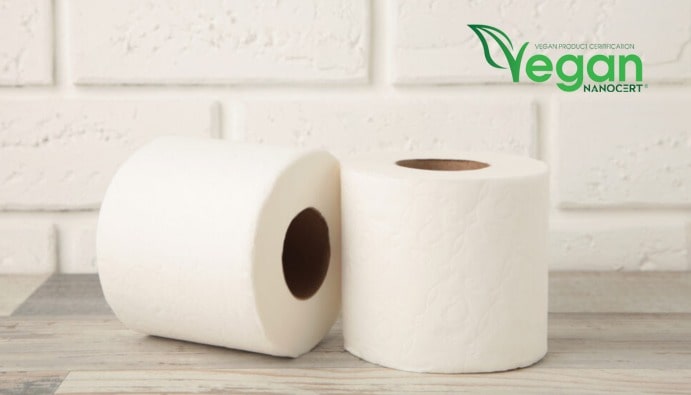
Vegan Toilet Paper
While we often wonder whether many products in our daily lives are vegan, has toilet paper ever crossed your mind? Did you know that toilet paper might not be vegan-friendly? Toilet paper is one of our daily personal necessities. How can toilet paper—a staple on every shopping list—possibly not be vegan? While vegans often have doubts about the vegan status of many products they use and consume, it turns out that toilet paper isn’t vegan either.Vegan toilet paper has gained popularity thanks to an eco-friendly and animal-friendly production philosophy. So, what are the different types of toilet paper, what sources are used to produce vegan toilet paper, and how is the Nanocert Vegan Certification obtained? Here are the details!
During the production of toilet paper, animal-derived gelatin and stearic acid—which is also of animal origin—are used to bind the fibers together. The use of gelatin—derived from animal skin and bones—and stearic acid—an animal-derived fat—means that toilet paper is not vegan.
In response to this, the production of vegan-friendly toilet paper for vegans has begun. During production, toilet paper is made using plant-based raw materials as alternatives to animal-derived products. It is important for vegan consumers to be able to determine whether toilet paper is vegan. Therefore, the easiest and most reliable way is to use toilet paper that is labeled and certified as vegan.
Resources Used in the Production of Vegan Toilet Paper
🔹Bamboo Fibers: A fast-growing and sustainable plant-based source.🔹Recycled Paper: An eco-friendly option produced from old newspapers and cardboard.
🔹Chemical-Free Cellulose Fibers: Derived from trees but contain no animal-derived components.
🔹Plant-Based Starch Adhesives: Non-animal alternatives that hold the sheets together.
Key considerations for vegan toilet paper production:
✔ It must not contain animal-derived additives (gelatin, stearic acid, etc.).
✔ No animal testing should be conducted during the production process.
✔ Plant-based or recycled materials should be preferred.
Nanocert Vegan Certification Process
1. Application ProcessManufacturers seeking vegan certification can apply through Nanocert’s official website by submitting information on their production processes, raw materials used, and the documents required for certification.
2. Review of Raw Materials
Nanocert officials conduct a detailed analysis of the product’s ingredients.
✅ The fibers used must be plant-based or recycled.
✅ No animal-derived components should be used in adhesive or bleaching processes.
✅ Odorless or plant-based fragrances should be preferred.
3. Inspection of the Production Process
Nanocert must inspect the company’s production facilities to ensure there is no risk of animal-derived cross-contamination. Products must not be processed on the same production line as non-vegan products.
4. Laboratory Tests and Ingredient Analysis
Samples are collected and tested for animal DNA in a laboratory setting. The absence of components such as animal protein, stearic acid, and gelatin must be verified.
5. Certification Approval
Once the entire process is successfully completed, the Nanocert Vegan Certificate is issued. Vegan toilet paper can then be marketed with the certified product label.
The Nanocert Certification Body continues to provide services under Vegan Product Analysis and Certification. We also provide services related to Cruelty-Free Certification.
For the latest news and updates about our services, follow us on LinkedIn.
To stay updated on our latest blog posts, follow our Instagram account.